
Drop off metrics don't give the whole picture.
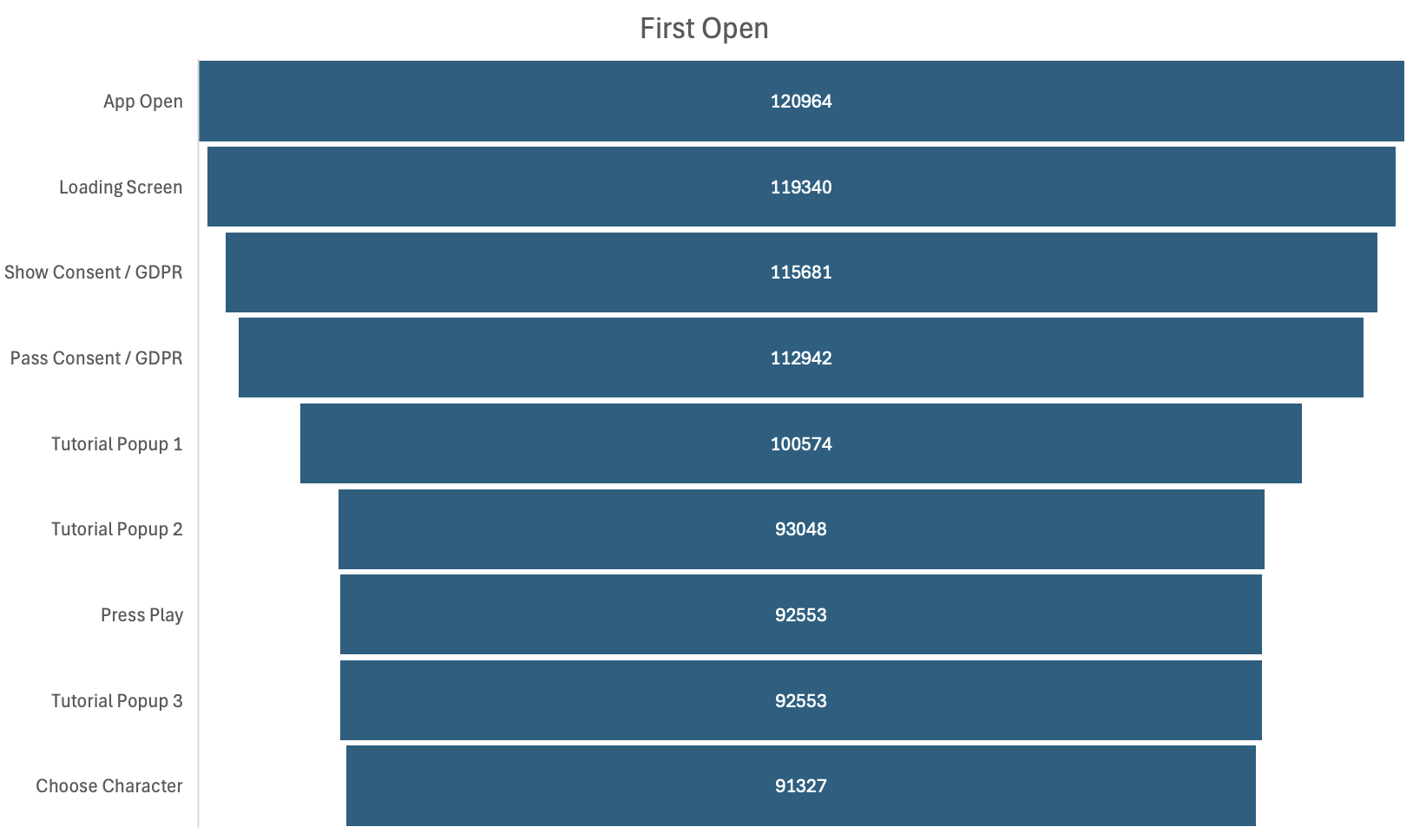
In game development, player funnels and drop off analytics are a staple of any post-launch strategy. They tell a simple story: how many players started the game, how many finished the first level, how many returned the next day. Over time, these metrics help shape updates, redesigns, and even monetisation strategies.
But there’s one problem.
They only show you what happened. Not why.
Understanding the “why” is where the real insight lives and where many analytics tools fall short. A sharp drop in your player funnel might signal an issue, but without more context, you are left making assumptions.
Numbers Without Nuance
Funnels are powerful. They help you spot patterns at scale. But they do not explain player intent, frustration, or confusion.
For instance, if you discover that 40 percent of players quit during a tutorial, that is useful information but it opens a dozen unanswered questions. Was the tutorial too long? Did the UI confuse people? Was there a crash or stutter? Or did the game simply fail to hook them?
Traditional analytics might show that players clicked certain buttons or stayed on one screen too long. But even with detailed event tracking, you are missing the human element. What was the player trying to do? What did they see? What did they expect to happen?
Without that layer of understanding, developers end up guessing or worse, changing things that were never the problem.
The High Cost of Certainty
Some studios bridge this gap with focus testing, user interviews, or player surveys. These methods can be incredibly valuable, but they come at a cost. Sessions are expensive to run, limited in scope, and often not representative of your full player base. They are also slow, meaning you might be weeks behind on feedback for a problem that started on day one.
Even when players do provide feedback, it is often filtered through memory, personal bias, or incomplete understanding of what went wrong. And when your data and feedback are disconnected, you lose time trying to piece it all together.
What developers need is a way to understand what really happened, not what someone thinks happened.

When Data Meets Experience
There is growing recognition in the industry that data is only part of the picture. What is missing is context, the visual, technical, and behavioural snapshot that surrounds a drop off event.
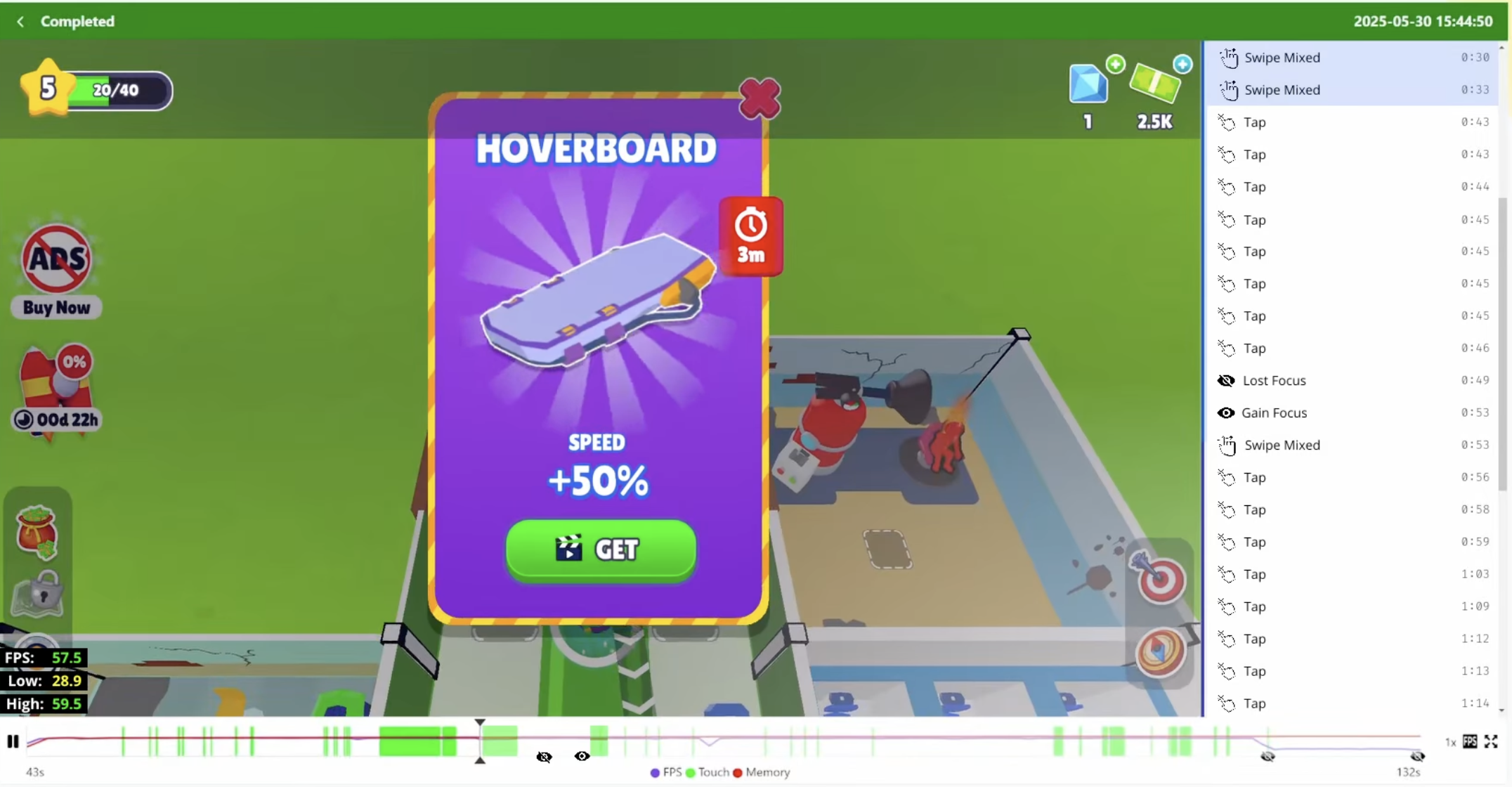
Imagine being able to not only see that a player quit halfway through level two, but to watch what they were doing in that moment. To see their taps, observe their pathing, track their frame rate, and spot the moment they gave up. Not in theory, but in real time.
This type of visibility is becoming increasingly accessible through tools that combine session playback with performance monitoring and interaction tracking. Rather than relying solely on post-event interpretation, developers can now see the game through the player's eyes.
One example of this kind of tool is something we’ve worked on internally, called IV Metrics. It’s designed to help teams identify the why behind the drop off, by capturing short user sessions at key moments and overlaying performance data and interaction logs. Tools like this are starting to fill the space between pure analytics and manual user testing.
What You Can Discover
When session replay is paired with metrics like memory usage and frame rate, patterns begin to emerge that numbers alone might miss:
- Interface pain points: Players repeatedly tapping the wrong button, or abandoning screens they do not understand.
- Performance spikes: A sudden frame rate drop right before players exit.
- Design confusion: Players walking in circles or ignoring objectives because of unclear visual cues.
Even brief glimpses into player behavior can lead to fast, informed decisions that improve the experience for everyone.
Designing with Context in Mind
With better insight, development teams can shift from reactive patching to proactive design. It becomes easier to:
- Rework tutorials based on actual player confusion.
- Optimise performance based on where it visibly impacts the experience.
- Prioritise fixes based on how issues unfold in context, not just by severity in crash logs.
Ultimately, this means better games, shorter feedback loops, and fewer misdirected assumptions.
The Future of Player-Centered Analytics
As tools continue to evolve, the gap between raw data and real understanding will shrink. More and more, we are seeing analytics platforms that blend quantitative data with qualitative context, giving developers a way to act with confidence rather than speculation.
While drop off metrics will always have their place, they are no longer enough on their own. They serve as a signal but not a solution.
The next wave of insight will come from pairing those metrics with visual and behavioral understanding. Whether it is through a custom tool, a video snapshot system, or something like IV Metrics, the key is the same:
If you want to know why players leave, you need to see what they saw.